The Viral Nostalgia Trend That Turned 2026 Into the World’s Biggest Time Machine
The viral nostalgia trend sweeping TikTok and YouTube right now is one of the most surprising cultural moments I’ve watched unfold in years — and I’ve been watching internet trends for a long time. Sometime around New Year’s Day 2026, my For You page stopped looking like 2026 and started looking very, very familiar. Flower crowns. Snapchat dog filters. Pokémon Go screenshots. Mannequin Challenge clips. It all came flooding back at once, and I genuinely had to check the date on my phone.
So what exactly is going on? The internet has decided that 2026 is the new 2016, with users across TikTok, Instagram, and Threads posting throwback edits, Snapchat dog filters, and clips set to mid-2010s hits. And the numbers behind it are stunning. TikTok reported that in the first week of the year, searches for “2016” surged by 452 percent on the platform. That’s not a trend. That’s a time warp.
This piece is going to break down why the viral nostalgia trend happened, what’s fueling it psychologically, how it’s hitting music streaming, and — honestly — what it says about us as a culture right now.
Why the Viral Nostalgia Trend Is Bigger Than Just a Throwback Meme
The viral nostalgia trend isn’t just people posting old selfies for the likes. There’s something real underneath it. For many people, 2016 represented the last time the internet felt more fun, messy, and unserious — well before algorithms and more curated feeds took over. I’d say that hits about as accurately as anything I’ve read on the topic.
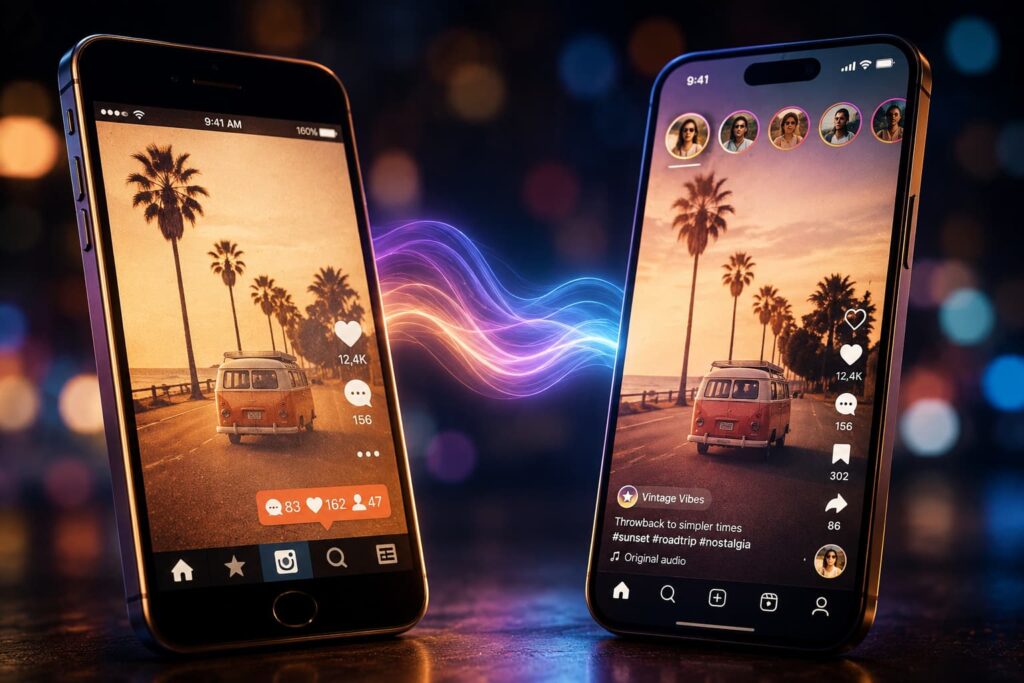
It’s become a viral trend with users posting compilation videos featuring oversaturated photos of palm trees, peace signs, and Snapchat dog filter shots — and the hashtag #2016 now has 1.7 million posts under it on TikTok. That number keeps climbing every day I check.
TikTok reports that searches for “2016” surged by 452% in the first week of the year, and stats from Spotify show a 71% increase in “2016” playlists compared to 2024. For many, 2016 felt like the last time social media felt truly social — a time before people performed for relevancy and before AI-generated content flooded feeds. That last part stings a little, because it’s accurate.
The Hidden Psychology Driving the Viral Nostalgia Trend
Here’s the thing — none of this is random. Nostalgia is a psychological coping mechanism that helps regulate our emotions, especially when we’re stressed. As one licensed clinical psychologist explains, “Mentally, we return to a time that feels safer and simpler that has pleasant memories attached.”
According to survey data, 80% of Gen Z worry their generation is too dependent on technology, 74% are concerned about social media’s impact on mental health, and 58% believe new technologies are more likely to drive people apart than bring them together. So when you feel that way about the present, of course, you look backward.
Historical nostalgia functions as a psychological resource for many Americans, with a majority reporting they find it helpful both when feeling stressed or overwhelmed by modern life (63%) and when experiencing worry or anxiety about the future (62%). The viral nostalgia trend, then, isn’t escapism for its own sake. It’s almost a survival instinct, according to the Archbridge Institute’s research on historical nostalgia in America.
In 2016, the coronavirus pandemic was still years away, two terms of Donald Trump as president were only on the horizon, and AI-generated content had yet to flood social media with misinformation. Put it that way, and you start to understand why people are so eager to go back.
The viral nostalgia trend also taps into what researchers call a “decade rule.” By the time they get into their 20s, every generation tends to feel nostalgia for one year from their teenage years. For Gen X, that year is usually 1994. For Gen Z, the year they’re most nostalgic for, if this TikTok trend is anything to go by, is 2016.
Shocking Streaming Numbers: How the Viral Nostalgia Trend Is Rewriting Music Charts
The viral nostalgia trend isn’t staying on social media — it’s moving money. Real money. And if you’re a music fan, the streaming data is eye-popping.
According to Luminate, the nostalgia-driven content translated into noticeable streaming gains for a number of tracks, a reminder of how social trends and nostalgia can influence listening behavior. Luminate’s findings show that the trend helped boost streams from 2016’s Top 10 Billboard Hot 100 tracks, looking at streaming activity between late 2025 and mid-January. Some jumps were massive.
Desiigner’s “Panda” saw streams rise by 68.6%, while Major Lazer’s “Don’t Let Me Down” saw a 51.6% increase. Those aren’t rounding errors — those are chart-level movements driven entirely by a throwback meme. You can read more about how this played out in RouteNote’s breakdown of how 2016 nostalgia is driving streams in 2026.
The viral nostalgia trend is also reshaping how brands think about content. TikTok nostalgia hashtags surged 130% year-over-year, with #nostalgia, #throwback, and #vintage doubling in total views between 2024 and 2026. Brands paying attention are already cashing in, and it’s honestly a little wild to watch.
Around 70% of consumers say nostalgic ads feel more authentic, and nostalgia-coded email subject lines achieved a 19% higher open rate over neutral copy in 2026. The viral nostalgia trend, it turns out, is a marketing gold mine too — not just a cultural one.
And celebrities aren’t sitting this one out. Social media has decided 2026 is the new 2016, and celebrities are leaning in with gusto — feeds are suddenly full of grainy mirror selfies, heavy filters, and screenshots from long-forgotten apps. Stars from Jon Bon Jovi to Travis and Jason Kelce have embraced the nostalgia wave. (Jon Bon Jovi posting a throwback is the most 2016 thing I’ve seen all year, and I’m here for it.)
Smart vs. Shallow: What the Viral Nostalgia Trend Gets Right — and What to Watch Out For
The viral nostalgia trend has real emotional value. But I’d be doing you a disservice if I didn’t flag the ways it can tip into something less healthy. Sound familiar? Most internet trends have a flip side.
Here’s what the viral nostalgia trend gets right:
- It builds genuine community — millions of people sharing a collective memory creates real connection, not just engagement metrics.
- It reminds creators that authenticity outperforms polish. The grainier the photo, the more people love it right now.
- It signals what audiences actually want: content that feels human, not AI-optimized.
- It gives artists a second wind — those streaming surges on decade-old tracks translate into real royalties, as Fast Company’s explainer on the 2016 TikTok trend makes clear.
But here’s what to watch out for with the viral nostalgia trend. Gen Z’s nostalgia isn’t confined to aesthetics or trend cycles — it reflects what it feels like to grow up in a world where the pace keeps increasing, and the ground keeps shifting. When the future feels abstract and hard to picture, the past carries a different weight. That’s healthy in small doses. In large ones, it can become avoidance.
Over 60% of Gen Z respondents said they expect life to be worse for them compared to previous generations, and 80% said the country is on the wrong track — the highest share of any age group surveyed. These are young people carrying a lot of anxiety about the present and where things are headed, and those feelings are inspiring their sentimentality toward the past. The viral nostalgia trend is a symptom of something bigger, not just a silly meme. You can find the full mental health context in this peer-reviewed study from the National Library of Medicine on social media and Gen Z mental health.
The viral nostalgia trend also risks becoming a loop. If you only ever look back, you stop making the new memories you’ll be nostalgic for in ten years. That’s probably worth keeping in mind as you scroll.
Final Word
The viral nostalgia trend of 2026 is more than a fleeting internet moment. It’s a mirror. It reflects a generation processing real anxiety about the future by retreating, briefly and communally, to a time that felt less heavy. The viral nostalgia trend tells you something important about what people actually want from their online lives: authenticity, connection, and a little less optimization.
If you’re a creator, there’s a clear lesson here. Lean into real moments. Ditch the over-produced look. Post the thing that feels human, not the thing that feels algorithm-ready. The viral nostalgia trend rewards exactly that.
And if you’re just a person scrolling through throwback edits at midnight — well, you’re in good company. Revisiting the past is fine. Just don’t get stuck there. The best thing the viral nostalgia trend can do for you is remind you that you’ve lived through genuinely good times — and that you’re entirely capable of creating more of them, starting right now, with whatever is in front of you.
Frequently Asked Questions About the viral nostalgia trend
What is the viral nostalgia trend taking over TikTok and YouTube in 2026?
The viral nostalgia trend is a social media wave where creators and users are revisiting, recreating, and celebrating content, aesthetics, and cultural moments from 2016 — including old memes, song challenges, and video formats. It started gaining traction on TikTok in early 2026 and quickly spread to YouTube, Instagram, and beyond. Think of it as a ten-year anniversary celebration of peak internet culture, driven largely by Gen Z and older millennials who lived through it the first time.
Is there any risk to participating in the 2026 nostalgia trend online?
For most people, joining in is completely harmless fun, but there are a few things to watch out for. Some bad actors use trending nostalgia formats to spread misinformation or run engagement-bait scams, so it pays to verify what you’re sharing before hitting post. If you’re a creator, be cautious about using old music or clips in your videos, as copyright strikes on retro content are more common than you might expect.
How do you participate in the 2026 Is the New 2016 trend on TikTok?
The easiest way to join is to recreate a piece of content you remember from 2016 — a popular dance, a meme format, or a “day in my life” vlog style — and post it with the hashtag #2026IsTheNew2016. Many creators add a split-screen comparing the original to their 2026 version, which tends to perform especially well with the algorithm. Keep it personal and specific; audiences respond most to content that feels genuinely nostalgic rather than forced.
How does the 2026 nostalgia trend compare to previous throwback trends like the Y2K revival?
The viral nostalgia trend of 2026 is uniquely internet-native in a way that the Y2K fashion revival wasn’t — it’s less about clothes or aesthetics and more about recreating the actual feeling of being chronically online in 2016. While the Y2K revival was largely driven by fashion brands and pushed top-down, this trend is almost entirely grassroots, fueled by individual creators mining their own digital memories. That makes it faster-moving and more participatory, but also less predictable in terms of which specific moments will resurface next.
Is it true that the viral nostalgia trend is just a marketing gimmick created by brands?
This is a common misconception — the viral nostalgia trend actually originated organically with everyday creators and fans before brands ever got involved. Major companies have since jumped in to capitalize on the sentiment, which can make it feel manufactured in retrospect, but the emotional pull driving the trend is genuinely user-led. Brand participation is a sign that the trend has momentum, not proof that it was engineered from the start.