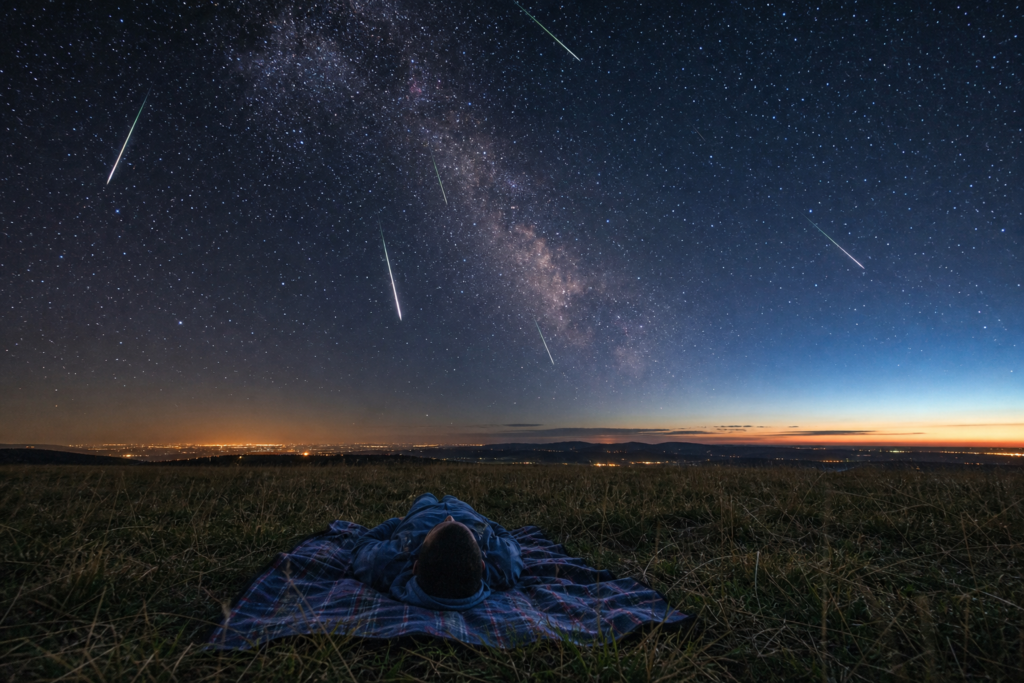
Every so often, the night sky puts on a show that reminds us just how spectacular the universe beyond our atmosphere really is. Tonight is one of those nights. The Eta Aquarid meteor shower is hitting its peak in 2026, and if you have ever wanted to witness a natural light display that traces its origins all the way back to Halley’s Comet, this is your moment. Whether you are a seasoned stargazer or someone who simply wants to step outside and look up, here is everything you need to know to make the most of this celestial event.
What Is the Eta Aquarid Meteor Shower?
The Eta Aquarids are an annual meteor shower that occurs each year, typically reaching peak activity in early May. What makes this particular shower so fascinating is its origin: the debris trail left behind by Halley’s Comet. As Earth travels through its orbit around the Sun, it passes through the trail of dust and particles shed by this legendary comet. When those tiny fragments slam into our atmosphere at tremendous speeds, they burn up and create the bright streaks of light we call meteors.
Halley’s Comet itself only swings through the inner solar system roughly every 75 to 76 years, but its cosmic breadcrumbs give us two opportunities each year to witness its legacy. The Eta Aquarids in May are widely considered the more impressive of those two annual events, especially for viewers in the Southern Hemisphere and those in the lower latitudes of the Northern Hemisphere.
Why the 2026 Peak Is Worth Watching
While the Eta Aquarids occur every year, not all peaks are created equal. Viewing conditions, lunar interference, and atmospheric clarity can all affect the quality of any given year’s display. In 2026, sky conditions are shaping up to offer a solid viewing window for observers who plan ahead and find themselves in a favorable location. At peak activity, the shower can produce anywhere from 40 to 85 meteors per hour under ideal dark sky conditions, making it one of the more prolific annual showers available to viewers in the Northern Hemisphere.
For those in the Southern Hemisphere, the Eta Aquarids are arguably the best meteor shower of the entire year, with the radiant point — the area of the sky from which the meteors appear to originate — rising much higher above the horizon, offering dramatically more activity and longer, more visible meteor trails.
Best Viewing Times for Tonight’s Peak
Timing is everything when it comes to meteor shower viewing. The Eta Aquarids tend to perform best in the hours just before dawn, typically between about 3:00 a.m. and 5:00 a.m. local time. This is when the radiant point in the constellation Aquarius climbs highest above the eastern horizon, giving meteors more sky to streak across before they fade.
- Pre-midnight: Activity will be low as the radiant point is still below or near the horizon in most locations.
- Midnight to 2:00 a.m.: Shower activity begins to pick up gradually. A good time to head outside and let your eyes adjust to the darkness.
- 2:00 a.m. to 5:00 a.m.: This is the prime window. Meteor rates climb significantly during these hours, and this is when you are most likely to catch impressive streaks and occasional fireballs.
- Just before dawn: Activity may taper slightly but the sky often remains active right up until twilight starts to wash things out.
Set an alarm, brew some coffee, and commit to heading outside during these hours for the best possible experience.
Where to Watch and How to Find a Dark Sky
Location can make or break your meteor shower experience. Light pollution from cities and suburbs dramatically reduces the number of meteors visible to the naked eye. Ideally, you want to find a spot well away from urban glow, such as a rural area, a national park, or open farmland with minimal artificial lighting in every direction.
Here are a few practical tips for choosing and preparing your viewing location:
- Use a light pollution map: Free online tools and apps can help you identify dark sky areas within driving distance of your home.
- Give your eyes time to adapt: It takes about 20 to 30 minutes for your eyes to fully adjust to darkness. Avoid looking at your phone screen during this time, or use a red-light flashlight if you need illumination.
- Face east, but watch the whole sky: While meteors appear to radiate from the Aquarius constellation in the eastern sky, they can streak in any direction. Lie flat on your back and take in as wide a view as possible.
- Bring comfort essentials: A blanket, a reclining lawn chair, warm layers, and some snacks will make a long viewing session far more enjoyable.
Equipment Tips: Do You Need a Telescope?
One of the great things about meteor showers is that no special equipment is required. In fact, telescopes and binoculars are actually a disadvantage here, since they dramatically narrow your field of view and you would likely miss most of the meteors. Your naked eyes are the ideal tool for this kind of observing.
That said, a few items can enhance your night:
- A stargazing app on your phone can help you identify the constellation Aquarius and understand where the radiant point is located.
- A camera with manual settings and a wide-angle lens mounted on a tripod can capture long-exposure photos of meteor trails if you are interested in astrophotography.
- A weather app is essential — even a thin cloud cover can significantly reduce visibility, so check your local forecast before committing to a late-night outing.
What to Expect: Managing Your Meteor Shower Experience
It is worth going in with realistic expectations. Even at peak rates, meteors do not fall in a constant stream. You might watch for five minutes and see nothing, then suddenly catch three in quick succession. Patience is the most important quality a meteor shower observer can bring to the experience. Give yourself at least an hour of viewing time to get a genuine feel for the shower’s activity level on any given night.
Also keep in mind that the peak can sometimes extend slightly beyond a single night. If tonight’s weather is poor in your area or you simply cannot make it outside, the night before and the night after peak can still offer elevated activity compared to the rest of the year.
Final Thoughts: A Reminder to Look Up
In a world full of screens and constant indoor distraction, the Eta Aquarid meteor shower is a beautiful reminder that some of the most breathtaking experiences in life require nothing more than stepping outside in the dark and looking up. Tonight, as Earth once again passes through the ancient trail of Halley’s Comet, you have the chance to witness something that connects the present moment to billions of years of cosmic history. Set that alarm, find your dark sky, and enjoy the show.