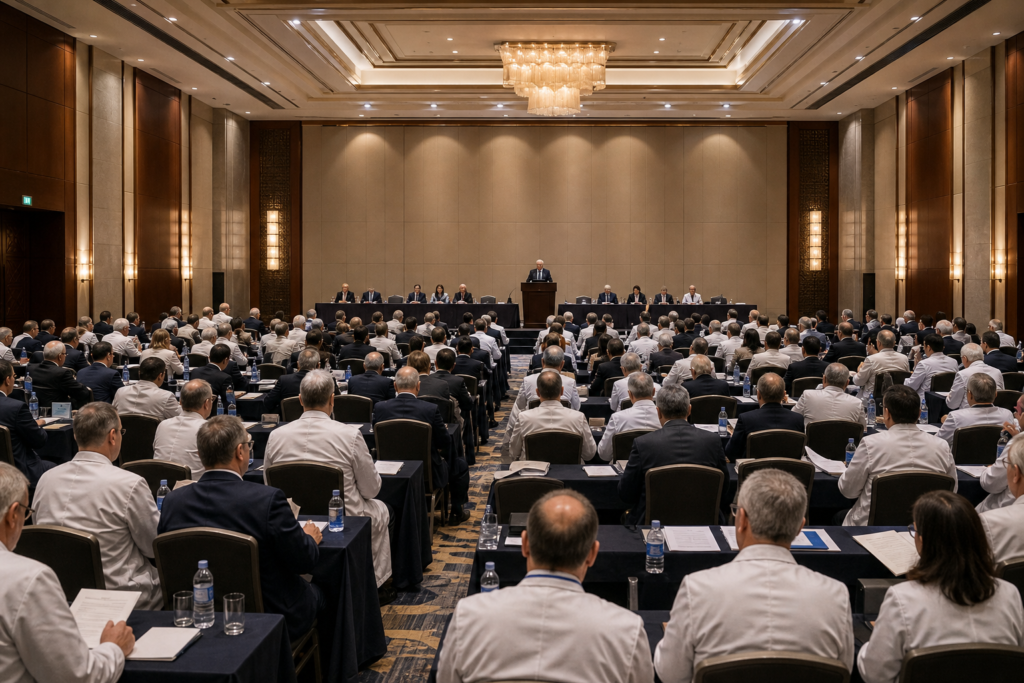
Every year, one of the most consequential gatherings in American healthcare takes place quietly behind closed doors — yet its outcomes ripple across hospitals, clinics, and doctor’s offices nationwide. The American Medical Association’s House of Delegates Annual Meeting is far more than a routine conference. It is the engine room of organized medicine in the United States, where policy is debated, leadership is elected, and the future direction of American healthcare is shaped by the physicians who deliver it every day.
What Is the AMA House of Delegates?
The House of Delegates, often referred to simply as the HOD, functions as the legislative and governing body of the American Medical Association. Think of it as a parliament for the medical profession. Delegates representing state medical associations, national specialty societies, and various medical interest groups convene to vote on resolutions, adopt new policies, and steer the AMA’s broader agenda.
With hundreds of delegates participating from across the country, the meeting represents a remarkably diverse cross-section of American medicine — from rural family practitioners to urban academic physicians, from surgical specialists to public health advocates. This diversity is precisely what gives the HOD its authority and legitimacy as a policymaking body.
The Business Side of Medicine at Scale
While the clinical dimensions of medicine often dominate public conversation, the AMA Annual Meeting brings the business of healthcare into sharp focus. Governance, finance, strategic planning, and organizational policy all take center stage during the proceedings.
Key business functions carried out at the annual meeting typically include:
- Budget and financial oversight: Delegates review and approve the AMA’s financial reports and budgets, ensuring the organization remains fiscally sound and aligned with its mission.
- Leadership elections: Officers and board members are elected or confirmed, shaping the AMA’s executive direction for the coming year.
- Policy resolutions: Hundreds of resolutions are submitted, debated, and voted upon — covering everything from physician payment reform and scope of practice laws to public health initiatives and medical education standards.
- Strategic initiatives: The meeting provides a platform to launch or evaluate major organizational programs, partnerships, and advocacy campaigns.
For healthcare industry observers and business professionals, the outcomes of these sessions carry real-world consequences. Insurance reimbursement policies, legislative priorities the AMA will lobby for in Washington, and standards that influence medical training pipelines all trace their origins back to decisions made in the HOD.
Why This Meeting Matters Beyond the Medical Community
It would be a mistake to view the AMA House of Delegates Annual Meeting as an insular medical event with limited outside relevance. In reality, its influence extends into sectors far beyond healthcare delivery.
Pharmaceutical companies, medical device manufacturers, health insurers, hospital systems, and even technology firms developing healthcare solutions all pay close attention to the policy positions that emerge from the HOD. When the AMA adopts a formal stance on a clinical or regulatory issue, it carries significant weight with lawmakers, federal agencies like the Centers for Medicare and Medicaid Services, and the broader public discourse.
From a business perspective, the meeting also reflects broader trends in how large professional associations are evolving their governance models. The AMA has increasingly embraced transparency, digital engagement, and stakeholder diversity — all hallmarks of modern organizational management.
The Delegate Experience: Advocacy in Action
For the physicians who attend as delegates, the annual meeting is both an exercise in democracy and a crash course in organizational politics. Preparing for the HOD requires months of groundwork — drafting resolutions, building coalitions with allied specialty societies, and lobbying fellow delegates ahead of key votes.
Reference committees play a crucial role in this process. Before resolutions reach the full floor for a vote, they are reviewed by smaller reference committees that hear testimony from delegates and medical stakeholders. This structured deliberation helps ensure that even complex, nuanced issues receive thorough examination before becoming official AMA policy.
The experience closely mirrors the legislative processes seen in government, making it a unique training ground for physicians who aspire to broader leadership roles in healthcare policy and administration.
Key Issues Typically on the Agenda
While each annual meeting carries its own distinct agenda shaped by the current healthcare landscape, several recurring themes tend to dominate the proceedings:
- Physician burnout and workforce sustainability: The ongoing mental health crisis among medical professionals remains a persistent priority, with delegates frequently advancing policies aimed at reducing administrative burdens and improving working conditions.
- Scope of practice battles: Debates over which healthcare professionals can perform which services — often pitting physician groups against nurse practitioners and physician assistants — regularly generate some of the HOD’s most spirited discussions.
- Healthcare affordability and access: Resolutions addressing drug pricing, insurance coverage gaps, and equitable access to care reflect the AMA’s enduring commitment to systemic reform.
- Technology and artificial intelligence: As digital health tools and AI-driven diagnostics reshape clinical practice, the HOD has increasingly been called upon to establish ethical guidelines and policy guardrails.
- Medical education and training reform: Evolving curriculum standards, residency match processes, and graduate medical education funding are perennial areas of concern for the delegate body.
The Broader Significance for Healthcare Business Leaders
For executives in health systems, insurance companies, and adjacent industries, monitoring AMA HOD outcomes is a form of competitive intelligence. The positions the AMA formally adopts often foreshadow regulatory changes, legislative priorities, and shifts in clinical standards that will eventually affect business operations across the healthcare sector.
Moreover, the meeting’s emphasis on organized advocacy offers a model that other professional associations study and sometimes emulate. The AMA’s ability to mobilize a large, geographically dispersed membership around coherent policy positions is a governance achievement worth examining from a pure organizational management standpoint.
Conclusion: Where Medicine Meets Management
The AMA House of Delegates Annual Meeting sits at a fascinating intersection of clinical medicine and organizational business. It is where the values of the medical profession are translated into actionable policy, where leadership is tested, and where the business of keeping American healthcare functioning is conducted with remarkable seriousness and rigor.
For anyone tracking the future of healthcare in the United States — whether as a clinician, a business leader, a policymaker, or an informed citizen — understanding what happens inside the HOD is essential. The decisions made in that chamber today will shape the healthcare system that all of us rely upon tomorrow.