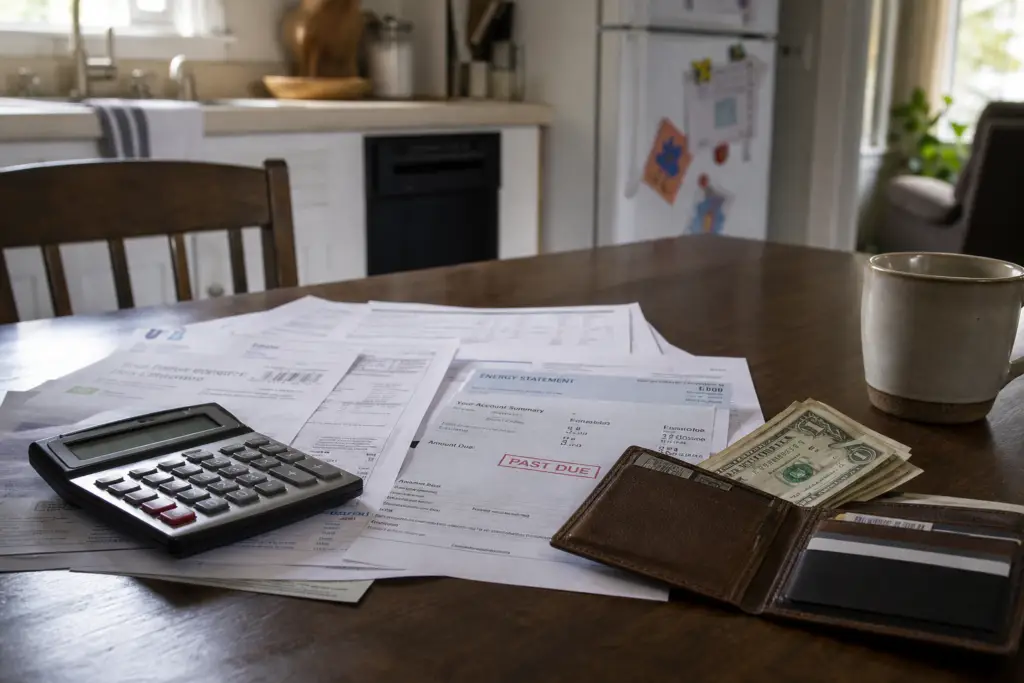
If it feels like your paycheck disappears faster than it should, you are far from alone. Across the United States, millions of households are caught in a persistent state of financial strain — one that experts say is no longer just a temporary rough patch, but a deeply embedded reality for a growing share of the population. Rising prices, mounting debt, and stagnant purchasing power have created a perfect storm that is proving incredibly difficult to escape.
The Dual Squeeze: Debt and Prices Are Hitting at the Same Time
What makes the current financial environment particularly punishing is not one single factor, but the combination of two powerful forces working simultaneously against household budgets. On one side, elevated debt levels mean that many Americans are already obligated to direct a significant portion of their income toward repayments — whether that is credit card balances, auto loans, student debt, or medical bills. On the other side, the cost of everyday goods and services remains stubbornly high, eroding whatever spending power remains after those debt obligations are met.
Together, these pressures create a compounding effect. Consumers who are already stretched thin by debt have less flexibility to absorb higher prices at the grocery store, the gas pump, or the utility bill. And when every dollar is accounted for before it even arrives, there is little room to build any kind of financial cushion.
This Is Not Just a Rough Patch — It Is Structural
One of the most important distinctions financial analysts are drawing right now is between cyclical financial hardship and structural financial hardship. Cyclical problems come and go with the economic tide — a recession hits, jobs are lost, but recovery eventually follows. Structural problems, however, are baked into the system in ways that do not simply resolve themselves when the broader economy improves.
The financial stress many Americans are experiencing today increasingly looks structural. Wages have struggled to keep pace with cumulative price increases over the past several years. Debt has accumulated gradually over time, not just during one crisis moment. And the habits and coping mechanisms households developed during periods of high inflation — relying more heavily on credit, deferring savings, cutting back on essentials — have become normalized behaviors rather than temporary adjustments.
This normalization is perhaps the most concerning development. When financial stress becomes the expected baseline rather than an exception, it reshapes how people think about spending, saving, and planning for the future.
How Financial Stress Ripples Through the Broader Economy
The consequences of widespread household financial stress extend well beyond individual bank accounts. Consumer spending is the engine of the American economy, accounting for a significant portion of overall economic activity. When a large share of the population is financially constrained, discretionary spending slows — and businesses feel it.
- Retail and hospitality sectors often see reduced traffic as households cut back on non-essential purchases and dining out.
- Savings rates can be distorted, with some households forced to draw down savings while others tighten spending aggressively to build a buffer.
- Consumer confidence tends to decline, which can become a self-fulfilling economic drag — when people feel financially insecure, they spend less, which slows growth further.
- Credit markets may come under pressure as delinquency rates rise among borrowers who are struggling to manage existing obligations.
In short, what happens at kitchen tables across America eventually shows up in economic data, corporate earnings reports, and policy decisions at the Federal Reserve.
Who Is Feeling It the Most?
While financial stress is touching households across income levels, it is not distributed equally. Lower and middle-income families tend to bear the heaviest burden because a larger share of their income goes toward fixed necessities — housing, food, transportation, and healthcare. These are the categories where price increases have been most acute and least avoidable.
For these households, there is simply less margin for error. An unexpected car repair, a medical bill, or a month with higher-than-usual energy costs can be enough to tip a carefully balanced budget into deficit, forcing reliance on credit and deepening the debt cycle that is already difficult to escape.
Even households that would traditionally be considered financially stable are feeling the pressure. Middle-class families who took on mortgages at higher interest rates, carry student loan balances, and are simultaneously managing rising childcare costs are finding that their incomes, while comfortable on paper, do not stretch as far as they expected.
What Can Households Do Right Now?
While structural economic forces are largely outside any individual’s control, there are practical steps households can take to reduce vulnerability and create more financial breathing room.
- Audit recurring expenses: Subscription services, insurance premiums, and utility plans are worth reviewing regularly. Small savings across multiple categories can add up meaningfully.
- Prioritize high-interest debt: Credit card debt in particular can snowball quickly. Even modest additional payments toward high-interest balances can reduce the total cost significantly over time.
- Build a micro emergency fund: Even a small buffer of a few hundred dollars can prevent a minor financial surprise from becoming a major crisis requiring new debt.
- Explore income diversification: Freelance work, part-time opportunities, or skill-based side income can provide flexibility that a single paycheck cannot.
- Seek nonprofit financial counseling: Organizations such as the National Foundation for Credit Counseling offer free or low-cost guidance for households dealing with debt management challenges.
The Bigger Picture: When Will Things Improve?
There is no simple answer to when broad financial relief will arrive for American households. Interest rates, while they may ease gradually over time, are unlikely to return to the historic lows that made debt cheap for much of the 2010s. Price levels, even if inflation cools, do not reverse — goods that cost more today will largely continue to cost more tomorrow. And wage growth, while positive in some sectors, has not uniformly kept pace with the cumulative impact of several years of elevated inflation.
Policy levers exist — from targeted debt relief programs to expanded safety net investments — but these remain subjects of significant political debate. In the meantime, the financial reality for many Americans is one of careful management, reduced expectations, and ongoing adjustment.
Final Thoughts
The language of being “entrenched” in financial stress is not alarmist — it is an honest description of where a large segment of American households finds itself today. Debt and price pressures are not new problems, but their persistence and their simultaneous impact have created a burden that is genuinely difficult to shake. Understanding the structural nature of this challenge is the first step toward addressing it — both at the personal finance level and in broader economic policy conversations. The hope is that awareness leads to action, and that action, over time, creates meaningful relief for the millions of families who need it most.