US Strikes Iran Self-Defense: What’s Really Happening in the Strait of Hormuz
US strikes Iran self-defense is the phrase dominating headlines right now — and honestly, if you’re trying to cut through the noise and understand what’s actually going on, you’re not alone. This conflict has been escalating for months, and the latest military action on May 26, 2026, has everyone asking the same thing: is this a defensive necessity, or are we watching a ceasefire quietly fall apart? Let me break it down for you, because the details really do matter here.
Understanding the US Strikes Iran Self-Defense Situation: The Core Facts
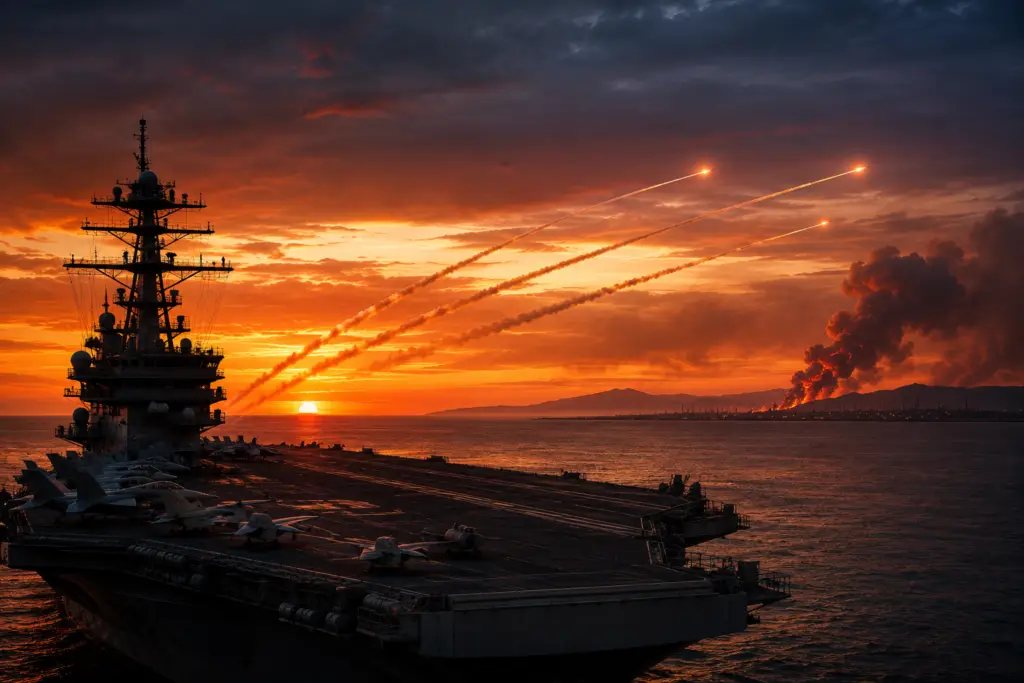
The US military conducted “self-defense strikes” targeting Iranian missile launch sites and boats around the Strait of Hormuz on Monday amid a ceasefire between the two countries and ongoing negotiations to end the war, according to US Central Command. That’s the official U.S. position, and it’s important to understand what the military says it was responding to.
The United States conducted these “self-defense” strikes in southern Iran, targeting missile launch sites and Iranian vessels trying to establish mines, according to CENTCOM. Captain Tim Hawkins, CENTCOM spokesman, said, “U.S. forces conducted self-defense strikes in southern Iran today to protect our troops from threats posed by Iranian forces. Targets included missile launch sites and Iranian boats attempting to emplace mines.”
This didn’t happen in a vacuum. To understand why tensions are this raw, you need the background. Since February 28, 2026, the United States and Israel have been engaged in a war with Iran and its regional allies. The conflict began when the US and Israel launched airstrikes on Iran, targeting military and government sites and assassinating several Iranian officials, including Supreme Leader Ali Khamenei.
Iran responded with missile and drone strikes on Israel, US bases, and US-allied Arab countries in West Asia, and the closure of the Strait of Hormuz, disrupting global trade. The Strait of Hormuz is one of the most critical chokepoints in the world for global oil supply — so when it’s blocked, everyone feels it at the gas pump.
The latest attacks come despite there being a ceasefire officially in place between the US and Iran since April 8. That’s what makes this so complicated. Both sides are technically under a ceasefire, yet military engagements keep happening. In the strait, the US and Iran are in a tug-of-war, and it’s pulling at the ceasefire seams.
Iran’s response was swift and furious. Iran accused the United States of “a clear violation of the ceasefire” between the two countries after the US launched what it called defensive strikes that threatened to disrupt intensifying talks to end the war. Iran’s Islamic Revolutionary Guard Corps says it has a “legitimate” right to respond to any “violation” of the ceasefire after the US military carried out what it called “self-defense strikes” targeting Iranian missile launch sites and boats.
How to Follow and Interpret This Crisis: What You Should Actually Be Watching
If you’re trying to make sense of this as a regular person watching from home, here’s what I’d suggest focusing on — because not every headline deserves equal weight.
Watch the Strait of Hormuz closely. U.S. Secretary of State Marco Rubio, who is in India, said that the Strait of Hormuz has to be open, “one way or the other,” referring to U.S. action against Iran. When senior U.S. officials talk like that publicly, it signals just how non-negotiable access to that waterway is for Washington. Some 1,600 ships in the strait are still stuck, waiting for any progress toward a deal. That’s a staggering number, and those aren’t just military vessels — they’re cargo ships, oil tankers, commercial goods. Real-world economic consequences for millions of people.
Pay attention to the diplomatic track, not just the military one. A high-level Iranian delegation arrived in Doha to discuss roadblocks to a permanent peace deal. The arrival of the delegation, which includes Iranian Minister of Foreign Affairs Abbas Araghchi and Iranian Parliament Speaker Mohammad Bagher Ghalibaf, came as Trump said that peace talks were “proceeding nicely.” The fact that talks are happening at all — even while bombs are dropping — is actually significant.
Don’t just read one source. This is a fast-moving story where each side is framing events very differently. Al Jazeera’s Alan Fisher said the strikes are likely to derail the ongoing negotiations to end the US-Israel war on Iran, as US President Donald Trump is “keen” to reach a deal. Meanwhile, CENTCOM frames every action as purely defensive. Reading widely helps you triangulate closer to reality.
Follow the nuclear angle. The ongoing diplomacy is over a memorandum of understanding that would open the Strait of Hormuz, cap Iran’s nuclear program, and lift US sanctions on Iran and unfreeze Iranian assets. Those are the three big pillars of any potential deal. If any one of them collapses, so does the agreement.
Track oil prices and gas costs at home. Amid the ongoing war in Iran, Americans have felt the strain at home at the gas pump. This conflict isn’t abstract — it’s hitting people’s wallets in real time.
The Dangers: What Could Go Wrong — and What’s Already Contentious
Here’s where I want to be honest with you: the US strikes Iran self-defense framing isn’t universally accepted, and there are real risks on every side of this equation.
The biggest danger right now is escalation dressed up as de-escalation. This is not the first instance of military action since a ceasefire was reached between Washington and Tehran on April 8. Later that month, US marines seized the Touska, an Iranian cargo ship, and in May, both sides traded fire in the Strait of Hormuz, with each side claiming the other initiated the attack. Each incident chips away at the ceasefire’s credibility.
There’s also a credibility problem for the White House. Rajan Menon, professor emeritus of International Relations at the City College of New York, said: “If we have, as the president claims, destroyed Iran’s military power entirely, then it’s strange that we are now fighting in self-defense.” That’s a pointed observation, and it reflects a broader tension in how the administration has been messaging this conflict.
On the Iranian side, Mohammad Bagher Zolghadr, the newly appointed leader of Iran’s Supreme National Security Council, displayed his hardline stance, vowing that “there will be no retreat” in Iran’s fight against the United States and Israel. Hard-liners gaining influence in Tehran rarely bodes well for peace talks.
And then there’s the human cost. Iran’s ambassador to the United Nations stated that more than 1,500 civilians have been killed so far, including at least 175 people killed by a reported US strike on an Iranian elementary school, and up to 3.2 million have been displaced. Thirteen U.S. service members have been killed. Whatever framing either government uses, these are real people.
Final Word
The story of US strikes Iran self-defense is ultimately a story about the razor-thin line between military necessity and diplomatic catastrophe. Every time a bomb drops during a ceasefire — regardless of who claims it was defensive — that line gets harder to walk. The core facts are these: the US says it acted to protect its troops from active threats, Iran says the strikes violated the ceasefire, and peace talks are wobbling but still alive.
What you can do right now is stay informed through multiple credible sources, follow developments in Qatar where negotiations are happening, and understand that the outcome of these talks will affect energy prices, global trade, and regional stability for years to come. The diplomatic window isn’t shut yet. Secretary of State Rubio said a deal with Iran could take just a few days, and Fox News, citing senior US officials, reported the Iran deal was “95% there.” There’s still room for hope — so don’t tune out just yet.